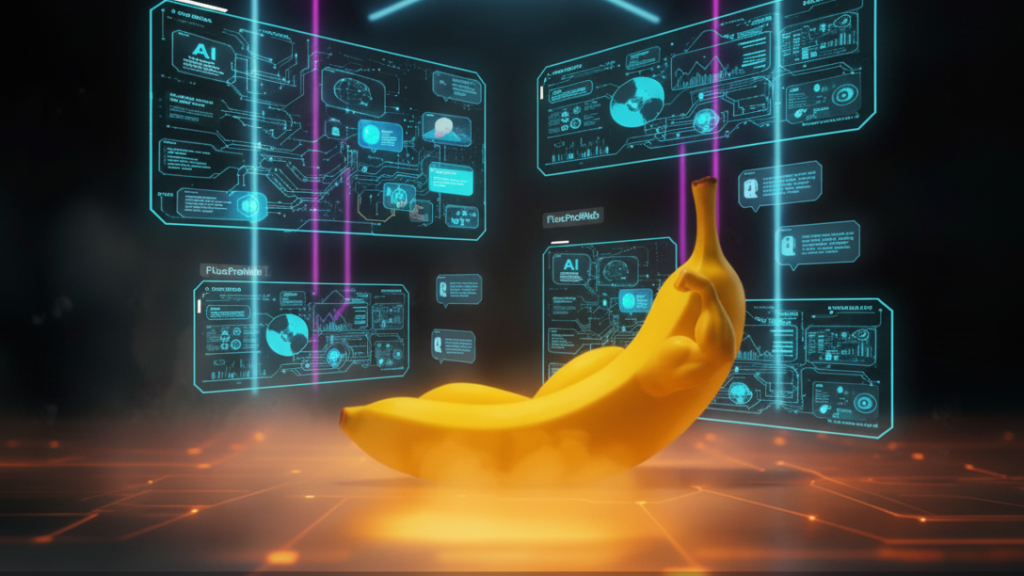
Quick Summary : Nano Banana is Google’s new nickname for the Gemini 2.5 Flash Image model—an ultra-fast, highly consistent image generator and editor now inside the Gemini app and developer tools. It’s gone viral because it keeps faces/brand elements consistent, edits in seconds, and watermarks AI images by default. Below you’ll find what it is, when it launched, why it’s blowing up, where it beats other models, 4 creative prompts to try, time-savers for founders, and a simple pricing snapshot.
What is “Nano Banana”?
Nano Banana is Google’s newest image generation + editing model (codename/nickname) powered by Gemini 2.5 Flash Image. It can:
- Generate photorealistic images from text
- Edit your own photos with natural language (change outfit/background, blend two photos, restyle while keeping your face intact)
- Do fine-grained inpainting/outpainting and style transfer
- Add invisible SynthID watermarking to label AI images by default
You can use it in the Gemini app (consumer) and via the Gemini API/Vertex AI (builders).
When did it launch?
The image model powering Nano Banana—Gemini 2.5 Flash Image—rolled out late August 2025 and began surfacing to users in the Gemini app shortly after. That’s when the “Nano Banana” nickname caught fire across social feeds and tutorials.
Why did it become so popular so fast?
- Shockingly fast edits on your own photos – Simple prompts like “put me in a navy blazer on a clean studio background” or “move this person to a beach at sunset” return results in seconds.
- Likeness consistency – It’s unusually good at keeping the same face and details across multiple edits/variations—huge for headshots, brand shots, and multi-image campaigns.
- Mobile-friendly creativity – Casual users can remix selfies for fun (comic strips, figurines, age/time travel), while pros use it for product mockups and ad concepts.
- Built-in responsibility – Every image carries an invisible watermark (SynthID), which helps teams stay transparent and compliant.
Where is it outperforming other models right now?
- Consistent human faces across edits/poses (fewer “melted” or off-brand results)
- Speed for interactive edits (great on phones and laptops—fast iterations feel like real-time)
- Context-aware editing (inpainting, background swaps, and multi-image blending maintain lighting and perspective more reliably)
- Watermarking & safety defaults (handy for teams with brand/compliance needs)
Note: Pure “wild art” or surreal compositions can still be fantastic on other models; Nano Banana currently shines most in photo-real edits and controlled brand use-cases.
4 fun prompts to try today
Copy these directly into Nano Banana (attach a selfie where noted):
- “Time-travel selfie” “Take this selfie [attach photo] and turn me into my 2003 self: softer lighting, 2000s hairstyle, casual college outfit, natural skin tone, 35mm film look.”
- “Mini figurine on a desk” “Turn me into a 10-cm vinyl figurine with a matte finish, standing on a wooden desk beside a coffee mug and laptop, soft morning window light, shallow depth of field.”
- “Founder headshot to boardroom” “From this headshot [attach photo], create a professional portrait: navy blazer, white shirt, subtle catchlight, neutral studio grey background, corporate LinkedIn style.”
- “Product mashup prototype” “Blend this bottle photo with this label art [attach two images] into a premium ‘Beta Launch’ mockup on a marble tabletop, soft key light, realistic glass highlights.”
Time-savers for startup founders
- Instant LinkedIn-ready headshots for you and your team (consistent background & attire)
- Ad concept boards in minutes (10 variations per idea to test angles/copy)
- Pitch-deck visuals (hero product renders, team photo touch-ups, on-brand backgrounds)
- Website refresh (clean product cutouts, lifestyle composites, banner art)
- PR/social moments (fast campaign imagery when timing is critical)
- Rapid prototyping (package/label mockups, A/B variant thumbnails, app store shots)
Pricing: how expensive is it?
- API/Developer: Roughly $0.039 per image (priced at $30 per 1M output tokens; each image ≈1,290 tokens). That’s competitive with popular options.
- Gemini app (consumer tiers): Daily image limits vary by plan (free tier allows a meaningful batch per day; paid tiers expand prompt and image caps substantially).
How it compares (ballpark):
- OpenAI (DALL·E / GPT-image): ~$0.04 per standard 1024×1024 image via API (varies by quality/size).
- Midjourney: $10–$120/month subscriptions (no per-image pricing; capacity depends on plan).
If you primarily need photo-real edits, brand consistency, and speed, Nano Banana’s per-image pricing is attractive. For heavy daily art exploration, a subscription model (e.g., Midjourney) might still make sense—choose based on workload and style.
Final thought
Nano Banana makes pro-grade image editing feel like texting a friend. For founders, that means faster brand polish, quicker experiments, and fewer creative bottlenecks—without leaving your browser or phone.